Is the white fuzz on my grow kit mycelium or mould?
Reading White Fuzz
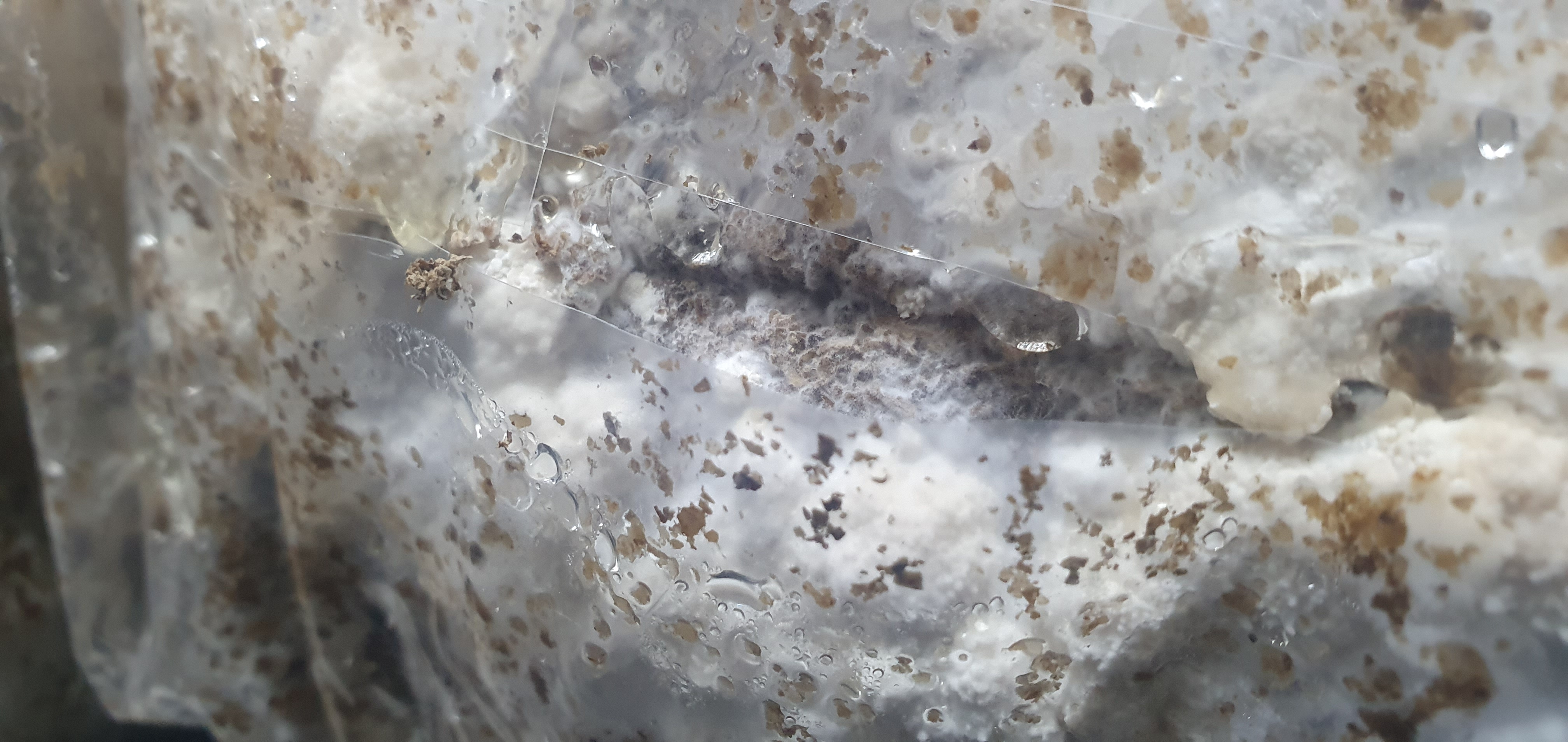
Almost every new grower asks the same question in the first week: is this white fuzz the mushroom, or a mould? Usually, it's mycelium — here's how to tell.
Relevant to: Lion's Mane, Blue Oyster, Pink Oyster, Coral Tooth
Short answer: in the first two weeks, white, cottony growth on your substrate is almost always mycelium — the mushroom itself — rather than a problem. Genuine mould usually shows colour (green, black, pink, or orange) rather than staying white.
What healthy mycelium looks like
- Bright white, slightly fuzzy or cottony in texture
- Spreads evenly across the substrate surface
- Smells earthy or faintly mushroomy, not sour
What to actually be concerned about
- Colour: green, black, blue-grey, pink, or orange patches
- Smell: sour, rotten, or acrid rather than earthy
- Texture: slimy rather than dry and cottony
If you see colour or an off smell, it’s worth photographing the patch and checking it against the troubleshooting guide for a second opinion before deciding what to do next.
A common look-alike: “dog hair”
Sometimes Lion’s Mane and oyster mushrooms produce long, wispy aerial mycelium that looks a little different from the dense fuzz on the substrate itself — often called “dog hair” by growers. This is still mycelium, not mould, and typically settles down once fruiting conditions (fresh air, light, humidity) are introduced.
If something looks wrong
Frequently asked
Is white fuzz on my grow kit normal?
Yes, in almost all cases. White, cottony growth in the first two weeks is mycelium — the mushroom itself — rather than mould. Genuine mould usually shows colour (green, black, pink) rather than staying white. See the full guide on reading white fuzz for the specific signs to watch for.